

Motor Selection for Industrial Compressors
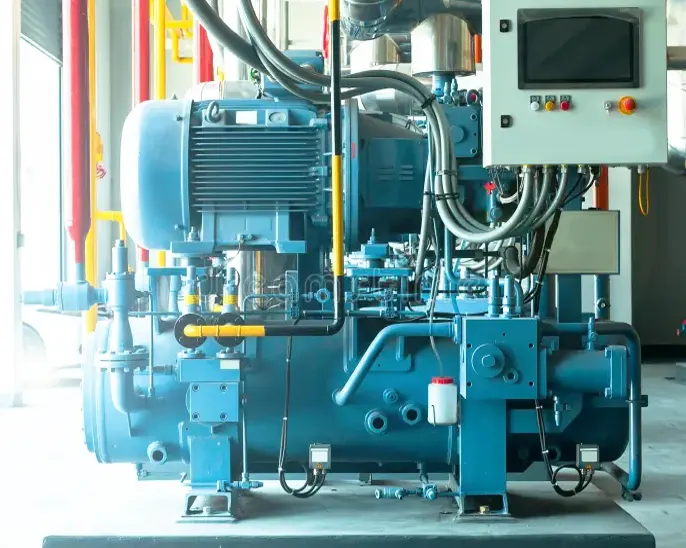
Selecting a compressor motor requires more than matching rated power. The motor must suit the compressor's operating speed, load characteristics, starting conditions, control method and mechanical arrangement.
Shangli offers general-purpose induction motors, dedicated inverter-duty motors, high-voltage induction motors and explosion-protected motor series for evaluation in compressor applications. Final selection depends on the compressor manufacturer's requirements and the installation conditions.
Start with the Compressor Specification
Identify the compressor type, the medium being compressed and whether the enquiry is for a new equipment package or a replacement motor. Different compressor designs should not be assumed to have the same starting or running requirements.
Provide the compressor manufacturer's specified motor output, operating speed and available load data. State whether the compressor starts loaded or unloaded and describe any unloading arrangement used during starting.
Also confirm the drive arrangement, such as direct coupling, belt drive or gearbox connection. This information helps define the motor's mounting, shaft and mechanical-load requirements.
Motor Options for Compressor Applications
| Application Requirement | Motor Series to Consider | Key Selection Checks |
|---|---|---|
| General-purpose low-voltage compressor drives | YE3, YE4 and YE5 | Rated output, operating speed, starting requirements, electrical supply, efficiency specification and mechanical compatibility. |
| Variable-speed operation with an external drive | YPT3 | Compressor-approved speed range, required torque across that range, drive compatibility and independent cooling requirements. |
| Compressor installations requiring a high-voltage supply | Y, YKS and YKK | Available motor rating, voltage, starting performance, cooling arrangement and site conditions. |
| Low-voltage drives in classified explosive gas atmospheres | Appropriately specified YBX-series motor | Required protection marking, certification, electrical rating and suitability for the installation. |
| Variable-speed drives in classified explosive gas atmospheres | Appropriately specified YBBP motor | Approved motor-and-drive operating conditions, speed range, cooling arrangement and required protection marking. |
| High-voltage drives in classified explosive gas atmospheres | Appropriately specified high-voltage YB3 motor | Motor rating, starting requirements, protection marking, certification and installation conditions. |
These are candidate motor families for technical evaluation, not interchangeable selections. The table does not establish suitability of every model for every compressor or hazardous area.
General-Purpose Induction Motors: YE3, YE4 and YE5
The YE series provides general-purpose three-phase induction motor options for industrial equipment. The supplied catalogue describes these series as totally enclosed, self-fan-cooled squirrel-cage motors.
For example, the documented YE3 specifications include 380 V or 400 V, 50 Hz, IP55 enclosure protection, IC411 cooling and continuous duty S1. These are reference specifications for the documented YE3 range, not default specifications for all Shangli motors.
When comparing YE3, YE4 and YE5 options, review the technical data for the required output and pole configuration. Efficiency, starting characteristics, dimensions and operating conditions should be considered together.
Where the compressor manufacturer specifies particular starting or overload requirements, include them with the enquiry. A matching rated power alone is not sufficient to confirm motor suitability.
Starting Conditions and Electrical Supply
Compressor starting requirements should be defined before a motor is selected. Provide the proposed starting method and any restrictions imposed by the electrical supply or equipment specification.
Starting arrangement: identify direct-on-line, star-delta, soft-starter, variable-frequency drive or another specified method.
Starting load: state whether the compressor starts loaded or unloaded and provide available starting-load information.
Acceleration requirements: provide the required acceleration time and driven-equipment inertia where available.
Starting frequency: specify the expected starts per hour and any repeated start-stop operating pattern.
Supply limitations: identify voltage, frequency and any project limits on starting current or voltage drop.
Compatibility with a particular starting method must be confirmed for the selected motor connection and rating. Do not assume that every motor can use the same starting arrangement.
Variable-Speed Compressor Drives: YPT3
The YPT3 series is designed for variable-frequency drive supply. Catalogue reference specifications include a dedicated insulation system for inverter operation, IP55 enclosure protection and IC416 cooling with a separately driven ventilation system.
For a compressor application, first confirm that the compressor is approved by its manufacturer for the proposed variable-speed operation. Provide the permitted minimum and maximum speeds and the required torque or power throughout the operating range.
The motor's available frequency range does not, by itself, define a safe operating range for the complete compressor. Motor, drive and compressor limits must be considered together.
The YPT3 catalogue includes configuration-dependent operating ranges. Request confirmation of the applicable constant-torque and constant-power ranges for the selected model rather than applying one range to the entire series.
Identify the proposed drive and incoming electrical supply.
Provide the compressor's approved speed range and load data.
Confirm the supply requirements of the independent cooling fan.
State whether the enquiry covers the motor only or requires coordinated motor-and-drive selection.
A separate variable-frequency drive is not automatically included in a YPT3 motor quotation. No fixed system energy-saving percentage is implied by selecting a variable-speed motor.
High-Voltage Compressor Motors: Y, YKS and YKK
The Y, YKS and YKK families can be evaluated for compressor installations requiring a high-voltage induction motor. The appropriate cooling and enclosure arrangement depends on the project and installation environment.
Y series: catalogue options include open and duct-ventilated arrangements. Confirm the required enclosure protection and ventilation conditions.
YKS series: uses an air-to-water cooling arrangement. Confirm the availability and specified conditions of the cooling-water supply.
YKK series: uses an air-to-air cooling arrangement. Confirm ambient conditions and the space required for cooling and maintenance.
Provide the required voltage, output, speed, starting method and compressor load information. The combined catalogue ranges of these families do not establish availability of every power, voltage and pole-count combination.
Mechanical Connection and Installation
| Selection Item | Information to Provide |
|---|---|
| Drive arrangement | Direct coupling, belt drive, gearbox connection or another specified arrangement. |
| Mounting | Required mounting designation, foot or flange details and installation orientation. |
| Shaft and coupling | Shaft diameter, shaft extension, key dimensions and coupling or pulley requirements. |
| External loads | Specified radial and axial loads, including belt-drive information where applicable. |
| Installation space | Dimensional restrictions, cooling-air clearance, terminal-box access and maintenance access. |
| Equipment-specific requirements | Any compressor manufacturer's requirements for vibration, shaft-system assessment, bearings or monitoring. |
Hazardous Areas and Special Environments
Describe both the medium being compressed and the environment around the motor. The process medium alone is not a complete specification for the motor's hazardous-area requirements.
For a classified explosive gas atmosphere, provide the site classification, required protection marking and applicable project approvals. Selection must be checked against the certification of the specific motor configuration.
A general-purpose motor must not be substituted for a motor with the required explosion protection. Likewise, certification of the motor does not establish approval of the complete compressor package.
If the motor will be exposed to combustible dust, corrosive conditions, unusual temperatures or other special environments, identify these conditions separately for technical review.
The motor families discussed on this page should not be assumed suitable for installation inside a hermetic or semi-hermetic refrigerant compressor. Such arrangements require a separate, application-specific motor assessment.
Replacing an Existing Compressor Motor
For replacement enquiries, send clear photographs of the motor nameplate, compressor nameplate and installed drive arrangement. Include the original motor datasheet and mounting drawing where available.
Explain whether the objective is a like-for-like replacement, an efficiency upgrade, a supply-voltage change or a conversion to variable-speed operation. Also describe any starting, temperature or reliability issues with the existing installation.
Matching frame size and rated power does not automatically establish interchangeability. Electrical performance, mechanical dimensions, starting capability and operating conditions must also be checked.
Send Your Compressor Motor Requirements
To help us prepare a relevant technical response, include:
Compressor type, manufacturer and model, if available.
Compressed medium and required motor output.
Operating speed and any proposed speed-control range.
Supply voltage, frequency and starting method.
Loaded or unloaded starting conditions and operating duty.
Mounting, shaft and coupling or belt-drive information.
Site conditions and any hazardous-area requirements.
Quantity, destination country and requested delivery date.
Shangli's Huzhou-based team supports international and domestic enquiries, coordinating motor selection, technical clarification and quotations. The proposed motor configuration, documentation, supply scope and delivery schedule will be confirmed during quotation.