

SHANGLI MOTOR
Manufacturing & Testing
Explore motor production and testing at Shangli’s Shanghai and Huzhou manufacturing bases.
WORKSHOPS & EQUIPMENT
Inside the Motor Production Floor
Explore the equipment and working areas behind motor production: stamping and machining stations, insulation treatment, rotor balancing, assembly lines, electrical testing and warehouse storage.
Select any photograph for a closer view of the equipment.
01 / COMPONENT PRODUCTION
Stamping & Machining Equipment
A closer look at the presses and machine tools used in component production, from stator laminations to turned parts and machined motor housings.
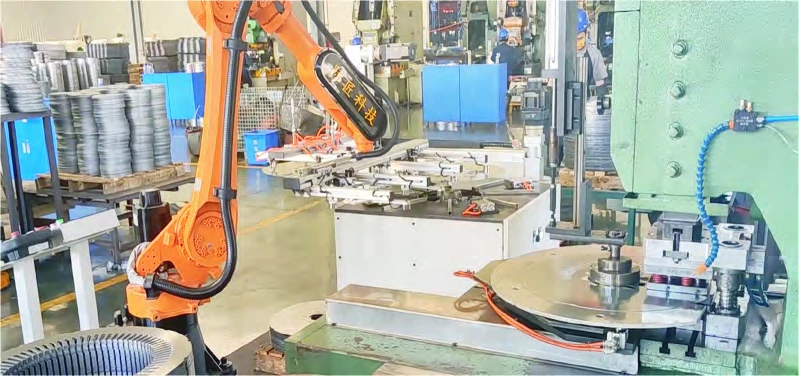
Automated Stator Stamping
The stamping station combines a press with automated handling equipment. Stator laminations are prepared at this stage before subsequent core and winding operations.
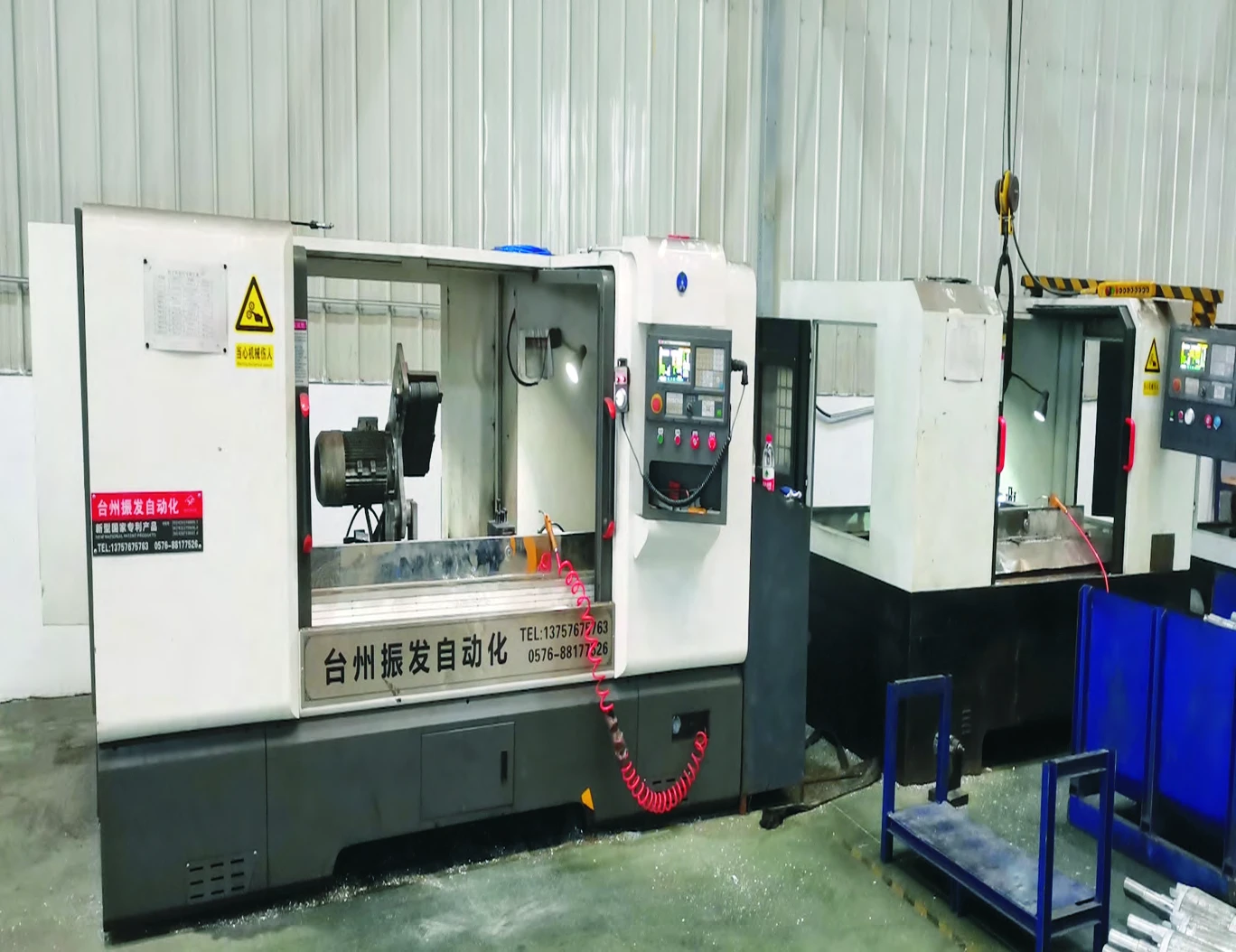
Rotor CNC Lathe
The enclosed rotor machining station provides a dedicated work area for turning operations. Tooling and machining dimensions follow the requirements of the component being produced.
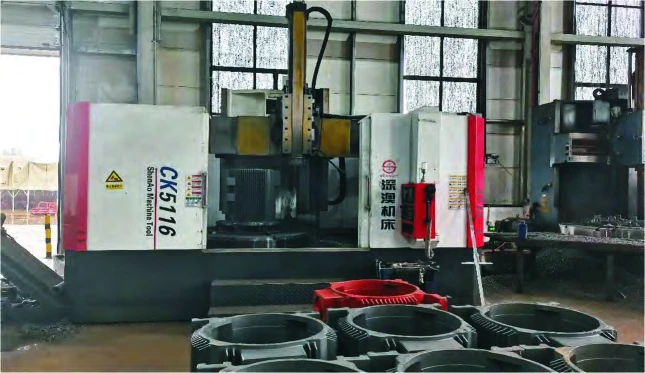
CNC Vertical Lathe
Vertical turning equipment is part of the housing machining workshop. This arrangement accommodates components positioned vertically for machining their circular surfaces.
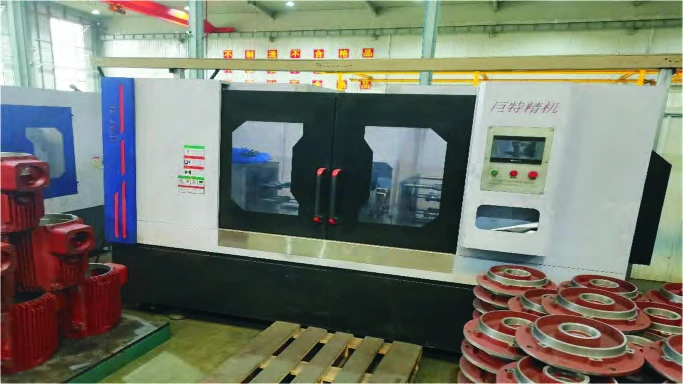
Combined Drilling & Tapping
Combined drilling and tapping equipment prepares holes and threaded connections in motor components. These operations establish the fixing points needed during assembly.
02 / WORKSHOP OPERATIONS
Insulation Treatment, Balancing & Assembly
The following photographs show distinct production operations: winding impregnation, rotor balancing, assembly, and surface finishing and packing. The manufacturing route varies by motor construction.
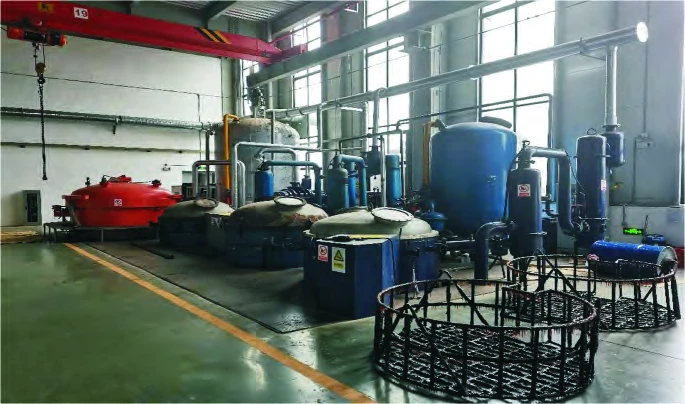
Winding Impregnation Equipment
The impregnation area is used for winding insulation treatment. The treatment process and insulating materials are selected for the motor design; the photograph shows the workshop equipment rather than a specification for every motor series.
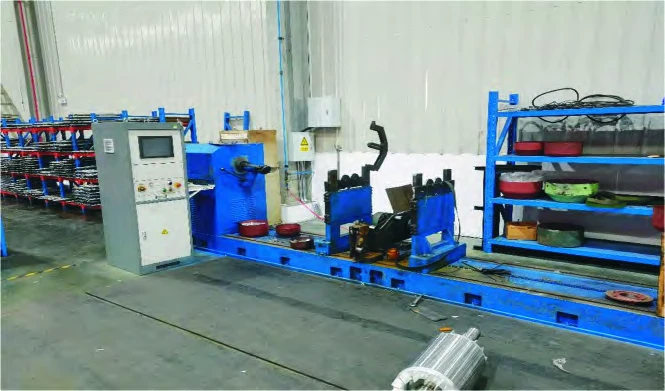
Rotor Balancing Station
The balancing machine supports the rotor while its balance is checked. Corrective work addresses rotor imbalance before the rotating assembly moves to subsequent production stages.
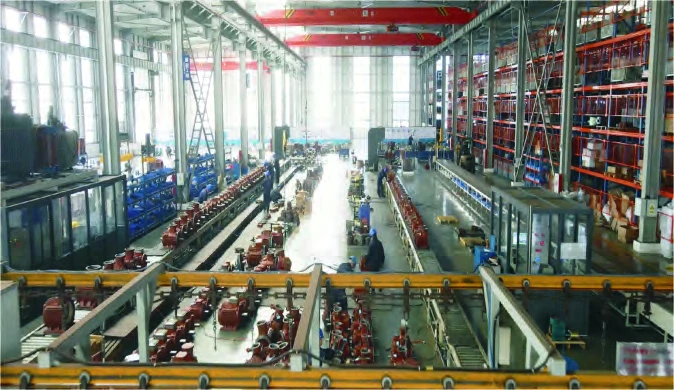
Motor Assembly Line
The assembly area provides workstations for bringing motor components together. Overhead lifting equipment supports the handling of components and assembled units along the workshop.
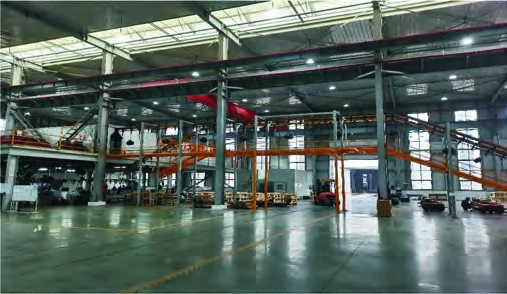
Coating & Packing Line
The coating and packing area handles finishing and preparation for packaging. Surface treatment, paint specification and packing arrangements depend on the requirements of the order.
03 / MEASUREMENT FACILITIES
Electrical & Motor Test Equipment
These photographs distinguish component inspection from testing on assembled motors. The facilities include a stator test system, a coupled motor test bench, factory-test controls and a motor type-test system.
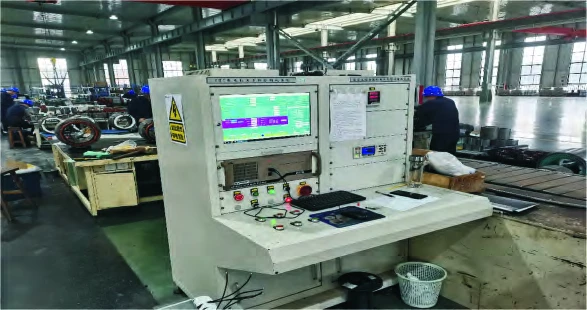
Stator Test System
A dedicated test station provides the interface for electrical checks on stator assemblies. Test items and settings are determined by the winding design and inspection requirements.
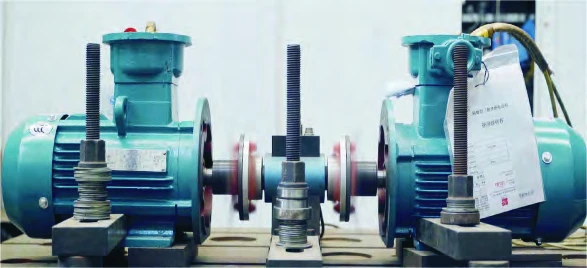
Motor Efficiency Test Bench
The laboratory photograph shows a coupled motor arrangement on a test bed. This facility supports motor performance and efficiency evaluation under defined test conditions.
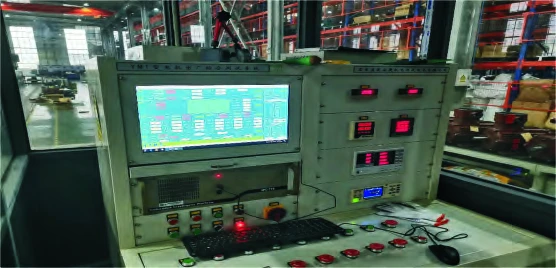
Factory-Test Control Panel
The factory-test console brings operating controls and measurement displays together at the test station. It provides an interface for conducting and observing the applicable production tests.
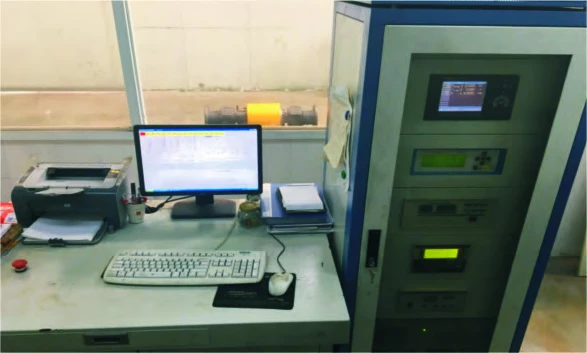
Motor Type-Test System
The type-test system includes a computer workstation and dedicated control cabinet. Type testing evaluates a specified motor design and is distinct from the routine tests applied during production.
04 / STORAGE AREAS
Materials, Components & Finished Motors
Separate views show how different categories of production material are accommodated: casting blanks, semi-finished components, spare parts and finished motors.
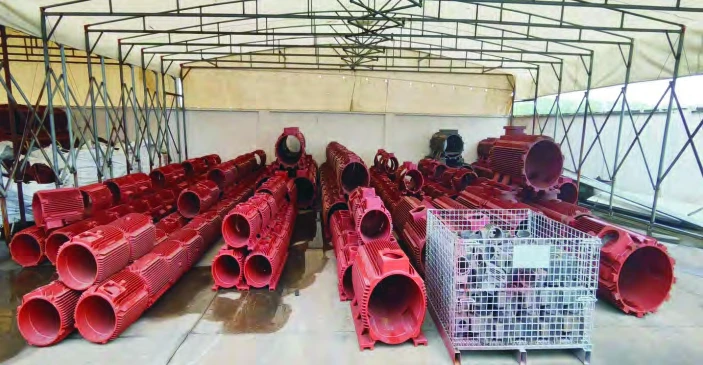
Casting Storage
The covered storage area contains unmachined motor housings and other cast parts. These materials are held separately from completed motors.
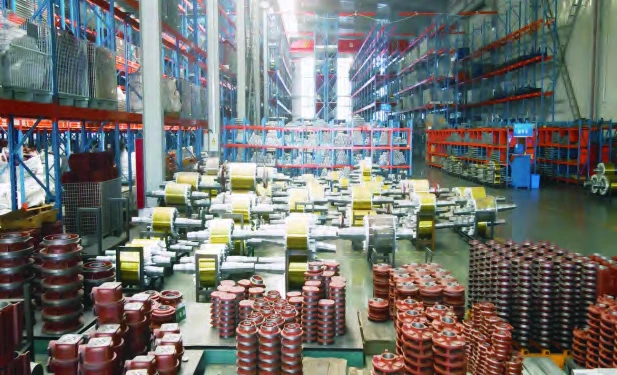
Semi-Finished Components
This area accommodates components between production stages. The photograph shows racks and grouped motor parts rather than a finished-product display.
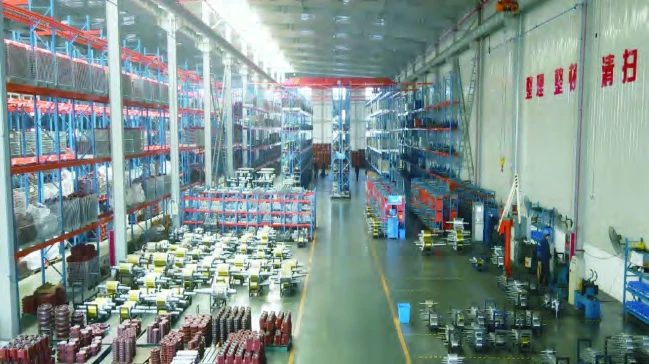
Parts Warehouse
Shelving and floor storage provide space for parts used in motor production. A central aisle gives access to the different storage positions.
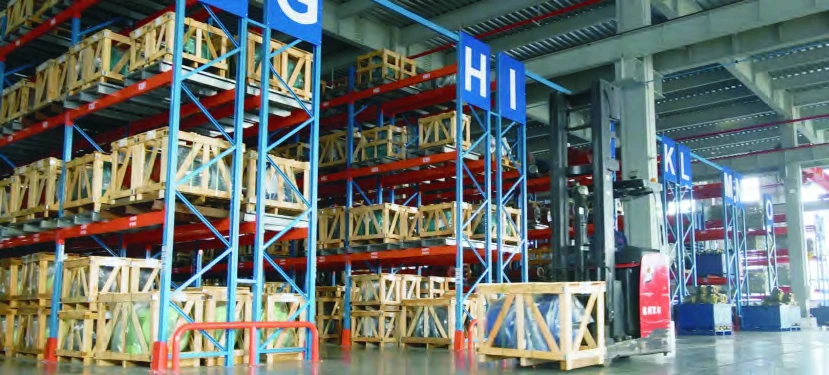
Finished Motor Warehouse
The finished-product area contains racked storage and wooden transport frames. This photograph shows warehouse organisation, not the availability or delivery status of a particular motor model.
More About Shangli
Learn about our group and review the scope of our published certification documents.
Discuss Your Motor Requirements
Send your application, electrical ratings, mounting requirements and any required testing or documentation.