

Motor Selection for Chemical and Petrochemical Facilities
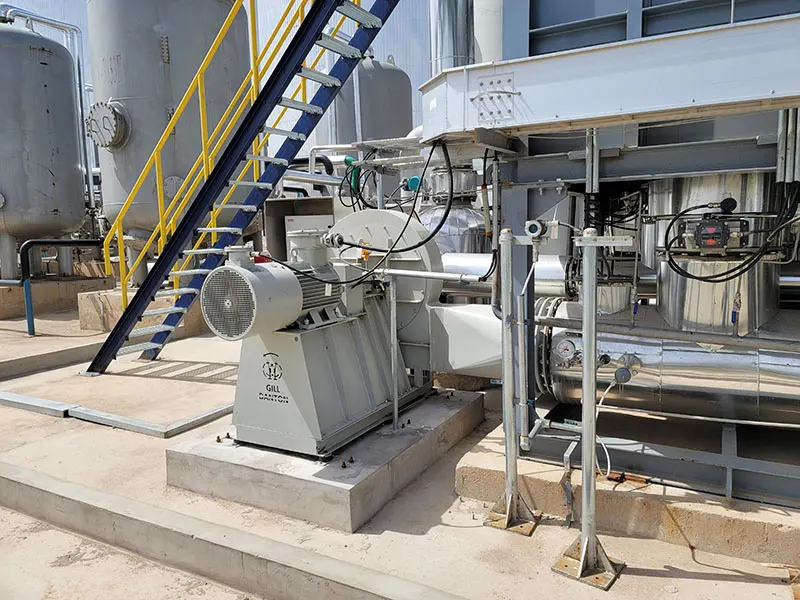
Chemical and petrochemical facilities use electric motors to drive pumps, compressors, fans and other process equipment. Motor selection must account for both the driven equipment and the conditions at the motor's installation location.
Shangli offers general-purpose induction motors, flameproof motors, dust-protected motors, dedicated inverter-duty motors and high-voltage motor families for technical evaluation. The appropriate series depends on the required output, speed, electrical supply, operating duty and environmental requirements.
A plant-wide description such as “chemical service” is not a complete motor specification. Different areas within the same facility may require different enclosure protection, cooling, corrosion protection and explosion-protection arrangements.
Define the Installation Area First
Before selecting a motor family, establish whether its installation location is a non-hazardous area, a classified explosive gas atmosphere or a classified combustible dust atmosphere. Use the project's approved area-classification information rather than assumptions based only on the industry or process.
Non-hazardous areas: general-purpose motors may be evaluated against the equipment specification and environmental conditions.
Explosive gas atmospheres: selection requires the specified gas group, temperature class, equipment protection level and applicable certification.
Combustible dust atmospheres: selection requires the relevant dust-protection specification, surface-temperature limits and applicable certification.
Locations with multiple hazards: identify all relevant conditions for a separate technical assessment. Do not assume that one protection marking addresses every hazard.
Motor Families to Consider
| Requirement | Candidate Motor Series | Selection Focus |
|---|---|---|
| General-purpose low-voltage drives in non-hazardous areas | YE3, YE4 and YE5 | Output, speed, efficiency specification, starting requirements, enclosure protection and installation conditions. |
| Variable-speed drives in non-hazardous areas | YPT3 | Required torque and speed range, inverter compatibility and independent cooling requirements. |
| Low-voltage flameproof motor requirements | Appropriately specified YBX3 or YBX4 | Exact protection marking, certificate scope, temperature requirements and electrical rating. |
| Variable-speed flameproof motor requirements | Appropriately specified YBBP | Permitted inverter operation, speed range, cooling arrangement and explosion-protection conditions. |
| Combustible dust protection requirements | Appropriately specified YFBX3, YFBX4 or YFBBP3 | Required dust protection, temperature limits and fixed-speed or variable-speed operating conditions. |
| Requirements for both gas and dust protection markings | Appropriately specified YBFBX5 | Verification of both protection markings and their certificate conditions for the intended installation. |
| High-voltage drives in non-hazardous areas | Y, YKS and YKK | Motor rating, starting performance, enclosure protection and available cooling provisions. |
| High-voltage flameproof motor requirements | Appropriately specified high-voltage YB3 | Required voltage and output, starting performance, protection marking and certificate scope. |
These motor families are candidates for technical review, not interchangeable selections. A series name alone does not confirm suitability for a particular hazardous area or destination market.
Match the Motor to the Driven Equipment
Process Pumps
Provide the pump manufacturer's required shaft power, operating speed, mounting arrangement and starting requirements. For variable-speed operation, include the approved speed range and available pump load data.
Describe the environment around the motor separately from the fluid being pumped. The process fluid alone does not fully define the motor's environmental or hazardous-area requirements.
Compressors
Identify the compressor type, required motor output, operating speed and whether starting takes place under loaded or unloaded conditions. Include available starting-load information, equipment inertia and the proposed starting method.
Where speed control is required, provide the compressor manufacturer's permitted operating range. The motor's available speed range does not independently establish suitability of the complete compressor system.
Fans and Blowers
Provide the equipment's specified power, speed, mechanical connection and operating duty. Describe both the atmosphere handled by the equipment and the conditions at the motor location.
Belt-driven arrangements, special shaft loads and installation restrictions should be identified before the motor configuration is selected.
Flameproof Motor Selection
Shangli's supplied catalogue includes flameproof motor options within the YBX3, YBX4, YBBP and high-voltage YB3 families. The available protection marking depends on the selected series and configuration.
Submit the exact project-required protection marking for review. Do not select a motor using only a general label such as “explosion-proof” or a gas-group designation without the remaining protection and temperature requirements.
Catalogue descriptions are useful for initial product selection. For procurement, request the certificate and nameplate information applicable to the proposed motor, together with any conditions relevant to its installation and operation.
Dust Protection and Dual-Marked Motors
Chemical production may also involve powders or other combustible particulate materials. Where the motor is installed in a classified dust atmosphere, use a motor configuration assessed for the specified dust-related requirements.
An IP enclosure rating is not a substitute for dust explosion-protection certification. Gas protection should not be assumed to include dust protection.
The YBFBX5 catalogue describes configurations with both gas and dust protection markings. Both must be checked against the intended installation. Dual marking should not be treated as automatic approval for an atmosphere containing a simultaneous mixture of flammable gas and combustible dust.
Variable-Speed Operation
Variable-speed requirements should be identified at the beginning of the enquiry. Provide the proposed inverter, required speed range, load characteristics and operating duty.
For non-hazardous installations, the YPT3 series provides a dedicated inverter-duty option. For relevant hazardous-area requirements, the YBBP or YFBBP3 series may be considered, subject to the selected configuration and its protection scope.
Confirm the permissible operating range, cooling arrangement, temperature-monitoring requirements and motor-and-drive compatibility. Do not assume that a standard fixed-speed flameproof motor is approved for unrestricted inverter operation.
High-Voltage Motor and Cooling Options
High-voltage motor selection must consider the equipment load, electrical supply, starting requirements and site cooling provisions. The general-purpose Y, YKS and YKK families use different ventilation and cooling arrangements.
Y series: catalogue options include open and duct-ventilated arrangements.
YKS series: uses an air-to-water cooling arrangement requiring confirmation of the cooling-water supply conditions.
YKK series: uses an air-to-air cooling arrangement requiring suitable ambient conditions and installation clearance.
These general-purpose families should not be treated as substitutes for a required flameproof motor. Where high-voltage flameproof construction is specified, the high-voltage YB3 family requires a separate selection review.
Corrosion, Weather and Monitoring Requirements
Explosion protection does not, by itself, define the motor's resistance to corrosion, weather or process-related exposure. Identify these requirements separately in the project specification.
Indoor or outdoor installation.
Ambient temperature and installation altitude.
Humidity, condensation and weather exposure.
Corrosive substances and the expected type of exposure.
Required enclosure protection and cooling conditions.
Required winding or bearing temperature monitoring.
Any anti-condensation heater requirements.
Environmental variants and monitoring options are available on selected motor series. Availability and compatibility with the required protection configuration must be confirmed for the individual quotation.
Documentation for International Projects
State the destination country and the certification scheme required by the purchaser or project specification. If the project requires ATEX, IECEx or another approval, identify that requirement explicitly for review.
A catalogue reference to a technical standard or an Ex marking does not, by itself, establish certification under every approval scheme. Required documentation must be verified for the exact product proposed.
Also specify any required performance data, dimensional drawings, inspection records or testing documentation at the enquiry stage. The available documentation and any additional inspection scope will be confirmed during quotation.
Send Your Project Requirements
For an initial technical review, please provide:
Driven equipment type and equipment manufacturer's requirements.
Required motor output, speed, voltage and frequency.
Starting method, operating duty and any speed-control requirements.
Mounting arrangement, shaft details and installation drawing.
Approved hazardous-area classification, where applicable.
Required gas or dust group, temperature limits and protection marking.
Ambient conditions, corrosion exposure and cooling provisions.
Required certification and project documentation.
Quantity, destination country and requested delivery date.
Shangli's Huzhou-based team supports international and domestic enquiries, coordinating motor selection, technical clarification and quotations. The proposed configuration, certification documentation, supply scope and delivery schedule will be confirmed for the specific project.