

Project Overview
In 2025, a fan manufacturer in Malaysia ordered motors from Shangli for fan equipment. The application photograph provided for this case shows a horizontally mounted motor driving a centrifugal fan through a multi-belt transmission.
This case focuses on the motor application and its mechanical arrangement within the fan assembly. Shangli's role concerns the motor, rather than the supply of the complete fan, ductwork or surrounding installation.
Project at a Glance
| Customer | Fan manufacturer in Malaysia |
|---|---|
| Order Year | 2025 |
| Application | Centrifugal fan drive |
| Motor Orientation | Horizontal |
| Transmission Arrangement | Multiple drive belts connecting motor and fan pulleys |
| Visible Equipment Layout | Motor and fan assembly mounted on a common base |
Equipment Arrangement Shown in the Photograph
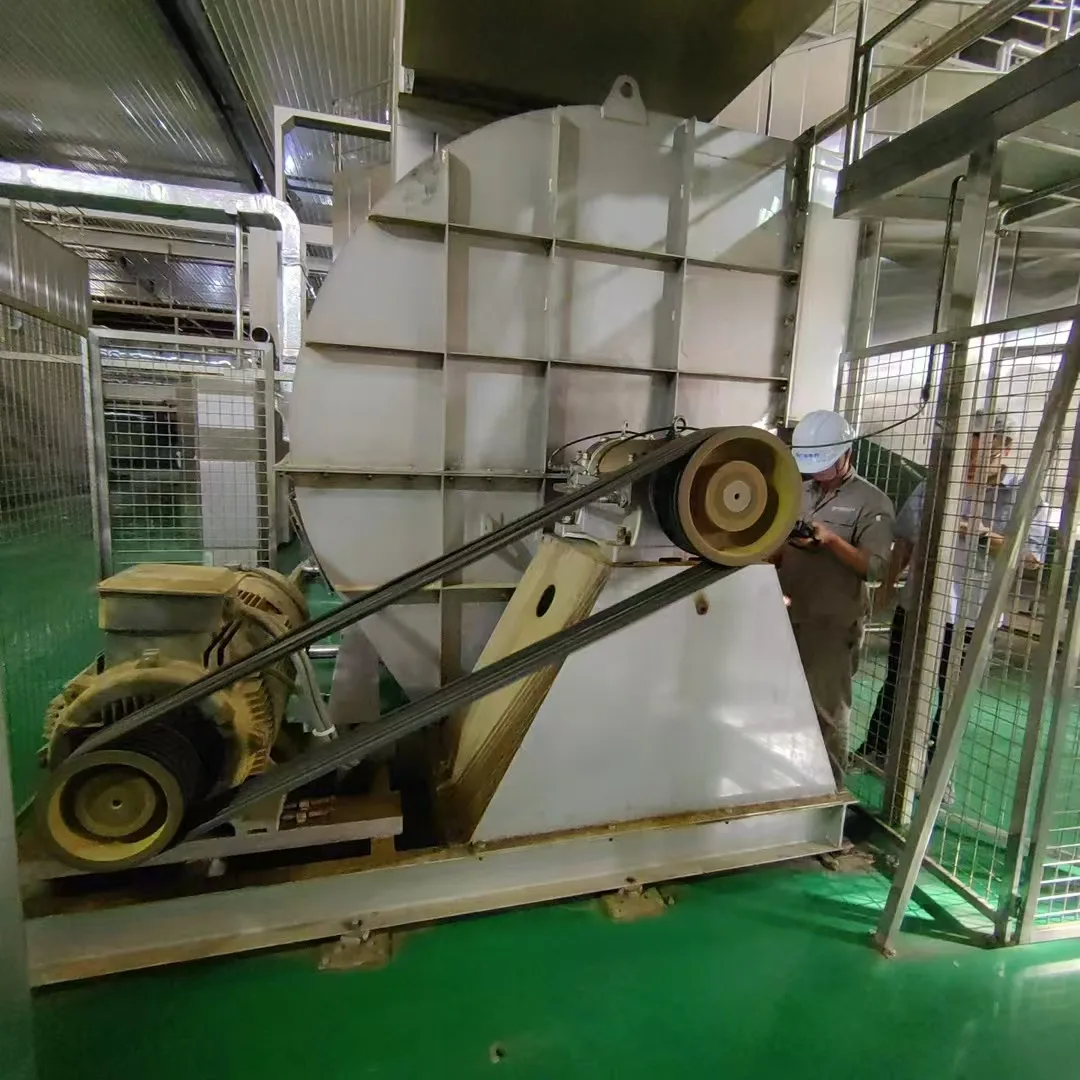 | 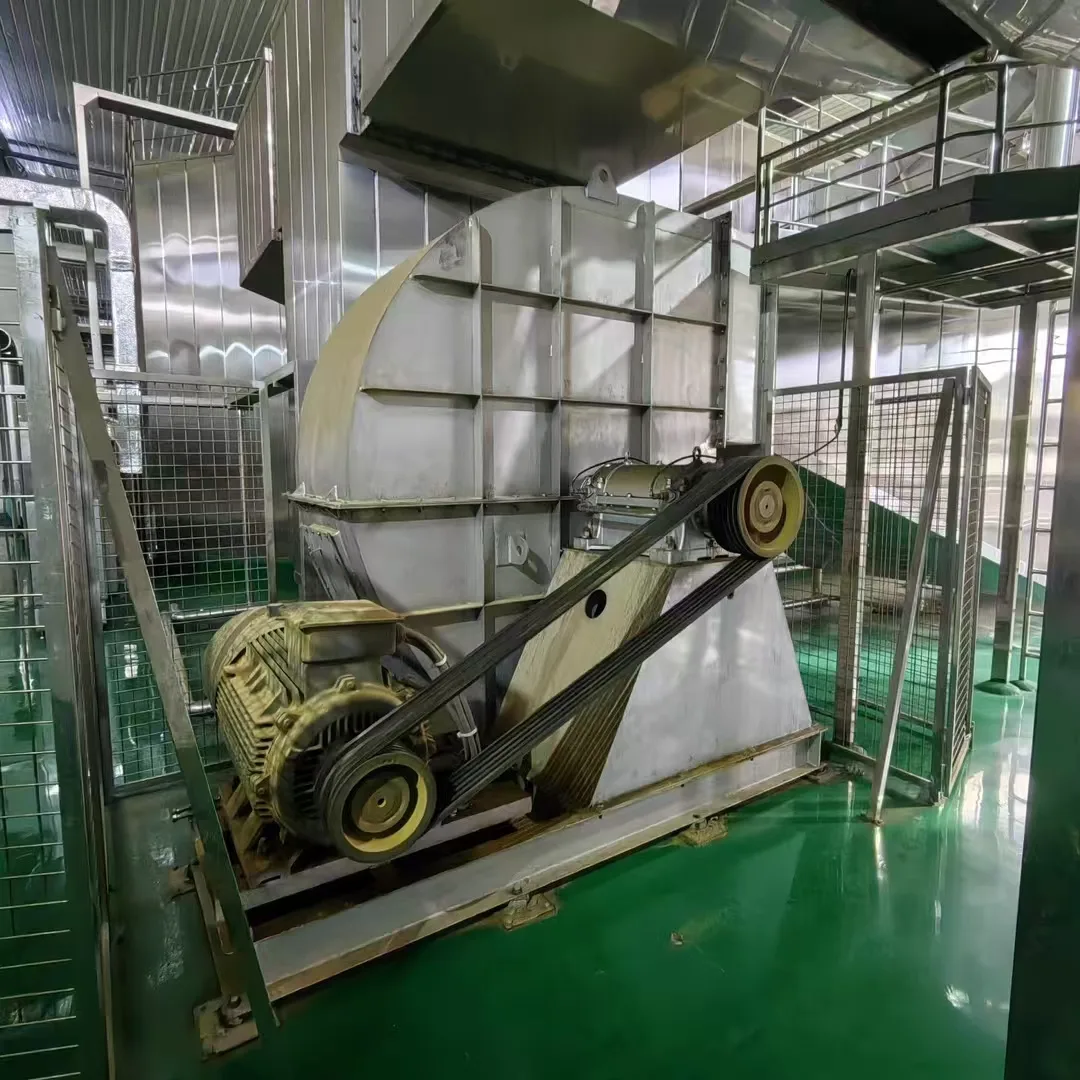 |
The motor is positioned beside the lower section of the
fan assembly. A pulley on the motor shaft is connected
by multiple belts to a pulley on the fan shaft.
This creates an indirect drive between the motor
and the fan impeller.
The photograph also shows the fan's scroll-shaped casing, external shaft-bearing arrangement and connected ductwork. The motor and fan supports are arranged on a common structural base.
These visible details identify the application as a belt-driven centrifugal fan arrangement. The photograph does not provide readable motor nameplate data, so the motor model, output and electrical ratings are not specified in this case.
The Motor's Role in the Fan Drive
The motor supplies rotational power through its pulley and the belt transmission to the fan shaft. Unlike a directly coupled arrangement, this configuration uses separate motor and fan shafts connected by belts.
For the motor supplier, the mechanical interface is therefore an important part of the equipment specification. The selected motor must match the required shaft connection, mounting dimensions and permissible loads associated with the belt drive.
The visible arrangement gives a practical reference for similar enquiries from fan manufacturers. It does not, by itself, establish the pulley ratio, belt tension, fan speed or motor loading.
Selection Information for Similar Belt-Driven Fans
When specifying a motor for a comparable fan package, the fan manufacturer should provide both the electrical requirements and the belt-drive details. The following checklist applies to future enquiries; it is not a record of measurements taken on this project.
| Selection Item | Required Information |
|---|---|
| Motor output and speed | Required rated power and motor operating speed, together with the fan's required shaft speed. |
| Electrical supply | Supply voltage, frequency and proposed starting or control method. |
| Pulley and belt arrangement | Pulley dimensions, belt specification, pulley position on the shaft and specified belt loads. |
| Mechanical interface | Shaft diameter, shaft extension, key dimensions and motor mounting dimensions. |
| Starting and operating duty | Available starting-load information, equipment inertia, starts per hour and running duty. |
| Installation environment | Ambient temperature, altitude, dust, moisture and any special protection requirements. |
Project Scope
This case records a motor order from a Malaysian fan manufacturer and illustrates the associated belt-driven centrifugal fan configuration.
It is presented as an equipment application reference, not as a measured performance comparison. No energy-saving percentage, airflow improvement, noise reduction or operating-life claim is made.
For another fan package, motor suitability must be confirmed using that equipment's own specifications. A visually similar installation may require a different motor rating, shaft arrangement or protection configuration.
Discuss Your Fan Motor Requirements
If you manufacture belt-driven centrifugal fans, send the required motor specification together with the pulley, shaft and mounting information. These details help define a suitable motor configuration for your equipment.
Required motor power and operating speed.
Supply voltage and frequency.
Pulley, belt and shaft-load information.
Motor mounting and installation drawing.
Starting method and any variable-speed requirements.
Operating environment and required approvals.
Order quantity, destination and requested delivery date.
For a replacement motor, include a clear photograph of the existing nameplate and the current drive arrangement. Matching rated power alone is not sufficient to confirm mechanical and electrical compatibility.
Shangli's Huzhou-based team supports international and domestic enquiries, coordinating motor selection, technical clarification and quotations for equipment manufacturers and industrial customers.